
The Drumlanrig Accords
A summary of the Webinar
Imam Dr. Sayed Razawi is the Chief Imam of Scottish Ahlul Bayt, an organisation working to meet the needs of the Scottish Shia Muslim community. He is a British scholar and religious leader with a research interest in Islamic philosophy, mysticism, and comparative religion. He works tirelessly to foster understanding between religious groups in Scotland and around the world.
The aim of this webinar was to explain Imam Razawi’s work with the Drumlanrig accords in the context of Muslim and Jewish Scripture.
A Common Word
قُلْ يَـٰٓأَهْلَ ٱلْكِتَـٰبِ تَعَالَوْا۟ إِلَىٰ كَلِمَةٍۢ سَوَآءٍۭ بَيْنَنَا وَبَيْنَكُمْ أَلَّا نَعْبُدَ إِلَّا ٱللَّهَ وَلَا نُشْرِكَ بِهِۦ شَيْـًۭٔا وَلَا يَتَّخِذَ بَعْضُنَا بَعْضًا أَرْبَابًۭا مِّن دُونِ ٱللَّهِ ۚ فَإِن تَوَلَّوْا۟ فَقُولُوا۟ ٱشْهَدُوا۟ بِأَنَّا مُسْلِمُونَ
Say, ˹O Prophet,˺ “O People of the Book! Let us come to common terms: that we will worship none but Allah, associate none with Him, nor take one others as lords instead of Allah.” But if they turn away, then say, “Bear witness that we have submitted ˹to Allah alone˺.”
Imam Razawi explained the Drumlanrig approach based on an understanding of the commonalities between Islam and Judaism. He covered the concept of both religions being similar in doctrine on the subject of monotheism and other beliefs.
The Drumlanrig Accords were created against the backdrop of the massacres of the 7th of October and the subsequent vicious war in Gaza. Imam Razawi described the despair and upset caused around the world and specifically in his community in Scotland. He discussed the exponential rise in both Anti-Semitism and Islamophobia. In addition to this he expressed the horror that we find ourselves in today in the UK after the heinous attack and murders at the Heaton Park Hebrew Congregation and the subsequent 27 verified attacks on Mosques. Never before has there been such a great need for unity and understanding between the Muslim and Jewish communities.
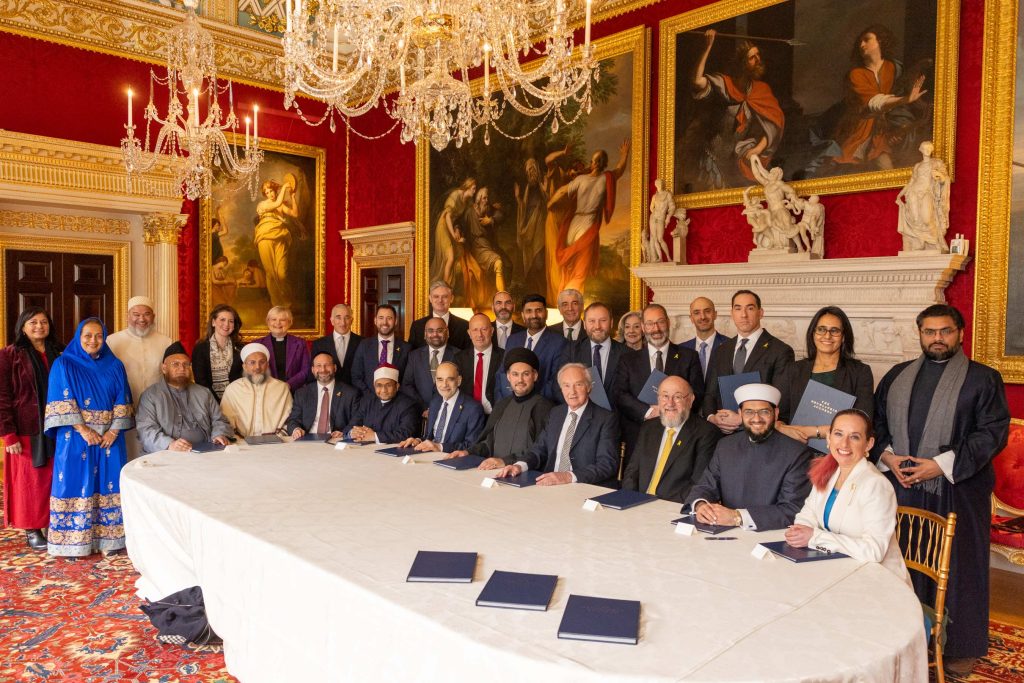
On the 11th February 2025 all the major representatives of the Jewish and Muslim communities met at Drumlanrig Castle in Scotland with a view to creating unity between these communities. In order that we express the comprehensiveness of the attendance and its encapsulation of quite literally the majority of Britain’s Jewish and Muslim society, here is a list of the signatories and their affiliations:
Chief Imam Dr. Sayed Razawi of Ahlul Bayt Scotland (the main organisation for Shia Muslims in Scotland)
Senior Imam Qari Asim (Chair of Mosques and Imams National Advisory Board, representing Barlewi Sunni Muslims)
Head Imam Dr. Khalifa Ezzat (Head Imam of the Regents Park Central Mosque, the biggest and oldest Mosque in the UK, Sunni Muslims)
Imam Sheikh Mohammad Ismail DL (Founder of The Imam Islamic Judiciary UK, Executive of Sheffield Federation of Mosques, representing Deobandi Sunni Muslims)
President of His Highness the Aga Khan National Council for the UK, (represented by Aliyyah Nasser)
His Excellency Kinana Jamaluddin Bhai Sahib (Ismaili, Bohra, Shia)
Chief Rabbi Sir Ephraim Mirvis KBE (Chief Rabbi of the United Synagogues, Orthodox Judaism)
Rabbi Josh Levy (Co-Chief Executive Progressive Judaism, UK and Ireland , Reform Judaism)
Rabbi Charley Baginsky (Co-Chief Executive Progressive Judaism UK and Ireland, Liberal Judaism)
Senior Rabbi Jonathan Wittenberg OBE (Masorti Judaism)
Senior Rabbi Joseph Dweck (Spanish and Portuguese Community, Sephardi Jewish Community)
Senior Rabbi Elchonon Feldman (United Synagogues, Orthodox Judaism)
This list is a good representation of all the Muslim and Jewish communities in the UK, including Sunni and Shia Islam and Orthodox, Progressive and Masorti Judaism.
The Accords, Content and Structure
It should be explained that the Accords are not, as the name might sound, a treaty between Muslims and Jews. This is because treaties can be broken and end. A treaty is a creature of diplomacy and based in the self-interest of politicians. The Accord is a Covenant, an agreement binding disparate groups to a common purpose with common aims.
The Content and Structure of the Accords are based on key concepts drawn from the wealth of Jewish and Muslim Scripture and the themes and values that all these communities have in common. And these are:
Diversity and Unity
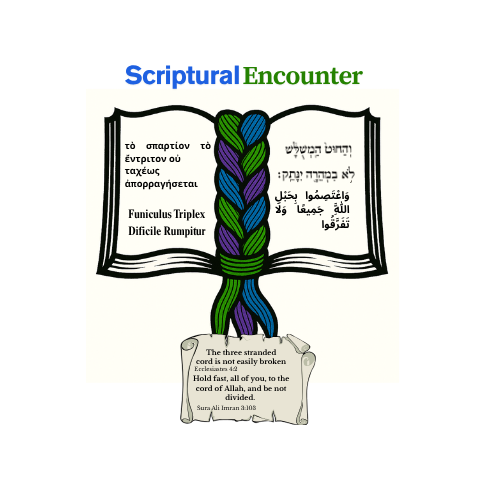
Diversity and uniqueness of each religious group while still being united in a belief in one God was emphasised by Imam Razawi in the following quotation from the Qur’an, which together with a similar one from the Bible, happen to be the mottos of Scriptural Encounter:
وَاعْتَصِمُوا بِحَبْلِ اللَّهِ جَمِيعًا وَلَا تَفَرَّقُوا
“Hold on to the Rope of Allah and be not divided”
(Koran, Surat Ali Imran 103)
וְהַחוּט, הַמְשֻׁלָּשׁ, לֹא בִמְהֵרָה, יִנָּתֵק.
“The Threefold Knot shall not easily be broken”
(Bible, Ecclesiastes 4:12)
Scripture
Both sets of communities are scripture-based and as such the scriptures and texts of Islam and Judaism have been used as a guide in the forming of the Accords.
Non Harm
As the Prophet Muhammad (PBUH) said: “By God, he does not believe”. It was asked, “Who is that (who does not believe)?” The Prophet (PBUH) answered, “That person whose neighbour does not feel safe from him” (Sahih al-Bukhari, 6016).
The Jewish tradition similarly teaches. “That which is hateful to you, do not do to others. This is the whole Torah; The rest is commentary” (Talmud Shabbat 31a).
The Results of the Accords
The resulting actions of the Accords are to create:
A Leadership Council, a youth leadership programme and joint social projects.
A Process of Unity
Imam Razawi described the process by which the Accords were created. The leaders met on a number of occasions and even though there was not constant agreement, there was a genuine desire on all sides to come to a situation of unity. It was very heartening to hear that the very process of the communities sitting down together and working out a common platform was formative for its participants and a sign of hope for all.
Question and Answer Session
The webinar ended with a short Question and Answer session. Questions were raised about the inclusion of Christians and the attitude of Jews and Muslims towards trinitarianism. Imam Dr. Razawi also discussed historical instances of Jewish and Muslim intellectual interactions such as the relationship between the Kabbalist Movement in Safed and Sufi thought. Some attention was drawn to interfaith relations between Israelis and Palestinians at the present time.
Conclusion
We look forward to hearing about the results of the Drumlanrig Accords. It seems very clear that there is a great deal of common ground between the Drumlanrig Accords and Scriptural Encounter. If the basis of the Accords is achieving unity between Judaism and Islam using the holy texts as a basis, then Scriptural Encounter’s aims of Interfaith Dialogue of Christians, Jews and Muslims through textual learning must be an essential part of this process.
For More Information: https://www.drumlanrigaccords.com/blank-2
Leave a Reply